


Closeness and playfulness
Lost That Spark? How to Rebuild Intimacy in Your Relationship
Why “Netflix and actually talk” might be the most underrated date night activity
Remember the early days of your relationship? You couldn’t keep your hands off each other, every text felt like a tiny adrenaline shot, and “Netflix and chill” actually meant something. Fast forward a few years, or a few kids, a mortgage, and a never-ending group chat with your in-laws, and suddenly the most intimate thing happening in your bedroom is a heated debate over who left their socks on the floor. Or, you go to bed at separate times.
If this sounds familiar, take a breath, you are not broken, and neither is your relationship. A drop in intimacy is one of the most common and most under-discussed issues couples bring to therapy.
What Do We Even Mean by “Intimacy”?
Spoiler: it’s not just about sex, although that’s often part of it. Intimacy is the emotional, physical, and even intellectual closeness that makes you feel truly seen by your partner. It’s the difference between living with your partner and actually being with them.

Sound familiar? You’re definitely not alone, and there’s nothing wrong with you for wanting more closeness with the person you’ve chosen to build a life with.
Why Does This Happen to Literally Everyone?
Desire and connection are not static. They ebb and flow with stress, life transitions, hormones, mental health, body image, unresolved resentment, and yes, exhaustion. Add in the modern epidemic of scrolling in bed instead of talking or watching TV until falling asleep (we’re all guilty), and it’s no wonder so many couples feel a quiet sense of distance creep in.
The myth that “good couples” should just naturally maintain a fulfilling sex life and deep emotional connection forever, with zero effort, sets people up to feel like failures when reality, read: life, gets in the way. Spoiler: even the happiest couples have to work at intimacy. It’s a skill, not a personality trait.
Okay, So Where Do We Go From Here? The Good News: Intimacy Can Be Rebuilt

Rebuilding Intimacy
Here are a few starting points — and yes, a qualified sex therapist can help you go much deeper into all of these.
1. Talk about sex like adults, awkward, we know
Most couples avoid talking about their sex life because it feels vulnerable, embarrassing, or like it might start a fight. But avoidance is exactly what creates distance. Try starting small: “I miss feeling close to you” lands a lot better than “We never have sex anymore,” even if they mean the same thing.
2. Schedule intimacy, yes, really!
“But spontaneity!” we hear you say. Here’s the thing: spontaneous intimacy works great when you’re 22 and don’t have a toddler banging on the bathroom door. For most adults, planned intimacy isn’t unromantic; it’s realistic. Put it in the calendar like the important relationship priority it is.
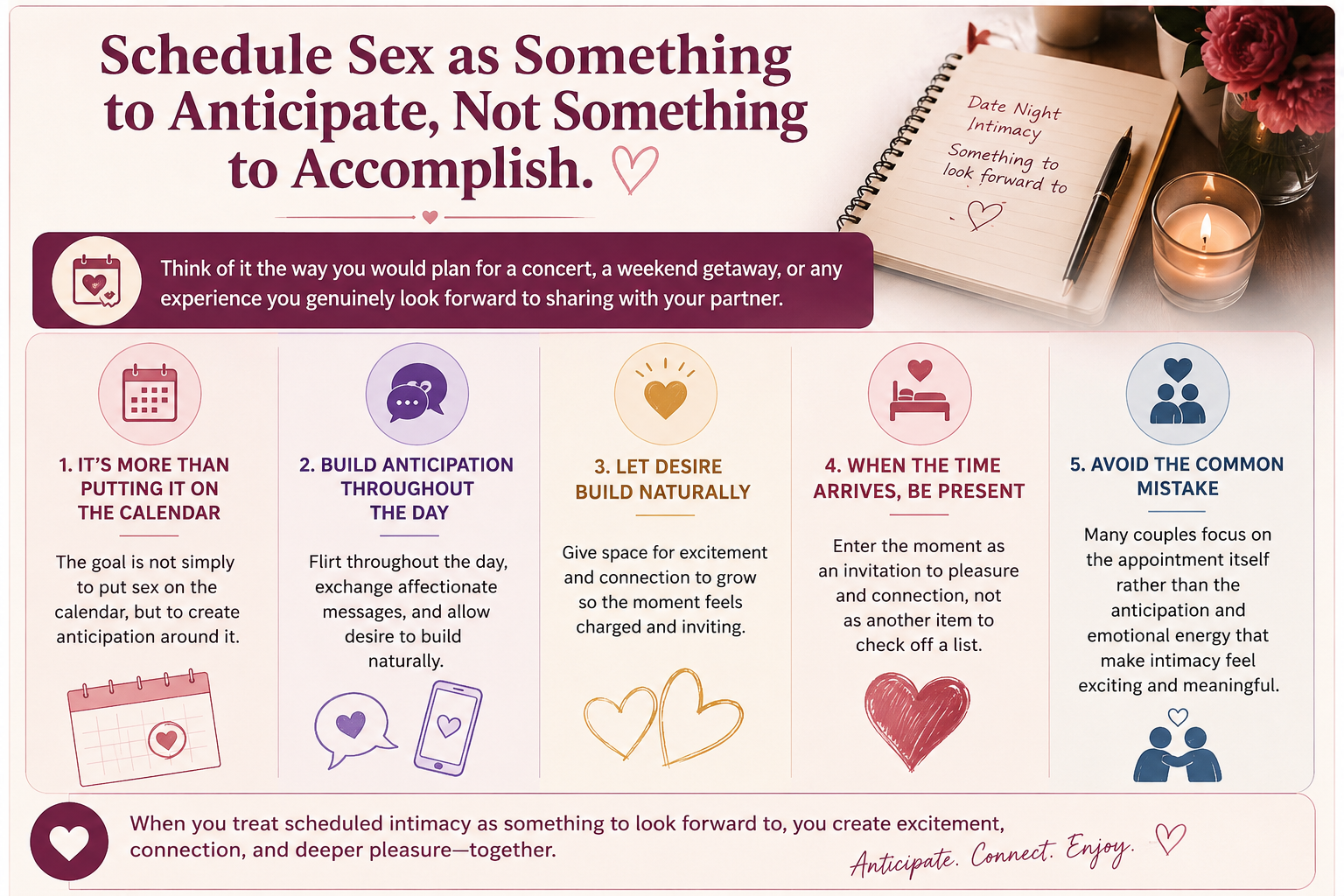
Schedule sex, make it fun!
3. Rebuild non-sexual touch first
Holding hands, a longer-than-usual hug, a back rub with zero expectations attached. These small moments rebuild trust and comfort, which often need to come back online before sexual desire does.
4. Address the elephant in the room: mismatched desire, stress, body image, past trauma, etc.
These issues rarely resolve on their own, and they’re incredibly common. A sex therapist can help you understand why the disconnect is happening, not just give you a list of tips.
When it’s a good idea, You See a Sex Therapist?
Honestly? Sooner than you think. You don’t need to be in crisis to benefit from sex therapy. Many couples come in simply because they want to feel close again, communicate better about sex, or work through a specific issue, such as low libido, painful sex, performance anxiety, infidelity recovery, or just feeling “stuck”.
At Mindfulness Therapy Services, our sex therapy services create a warm, non-judgmental space to talk openly about intimacy, sex, and connection without the awkwardness you might expect. Whether you’re coming in as a couple or on your own, we’re here to help you reconnect with your partner and yourself.
Frequently Asked Questions
Do we need to be “broken” to go to sex therapy? Not at all. Most couples who come to sex therapy aren’t in crisis — they just want to feel more connected, communicate better about sex, or work through a specific issue before it becomes a bigger one. Think of it as relationship maintenance, not relationship repair.
What if my partner doesn’t want to go? That’s okay — you can absolutely start individual sessions on your own. A lot of people find that working on their own communication, body image, or expectations creates positive ripple effects in the relationship, even before their partner is involved.
Is sex therapy just… talking about sex the whole time? There’s definitely talking involved (it is therapy, after all), but sessions focus on communication, emotional connection, and practical strategies — not anything physical happening in the room. It’s a safe, judgment-free space to talk about things you might never have said out loud before.
How long does it take to see results? It varies, but many couples notice small shifts — like feeling more comfortable talking about intimacy, or rediscovering non-sexual touch — within the first few sessions. Bigger changes in connection and desire usually build over time, especially if there are deeper issues (stress, trauma, mismatched libido) to work through.
Is this covered by insurance? Many extended health plans cover sessions with a registered therapist or counsellor. We’d recommend checking with your provider about coverage for psychotherapy or counselling services, and feel free to reach out if you have questions about cost. Private Psychotherapy and Social Worker Services are not covered by OHIP.
Ready to feel close again?
Contact us to book a confidential session or a free consultation with one of our experienced sex therapists. Your relationship — and your sex life — deserve real attention, not just leftover energy at the end of a long day.